Troy-Bilt Storm 2410 Excessive Vibration: Stop First, Inspect Second
A safety-first guide for new or sudden vibration on the Storm 2410.
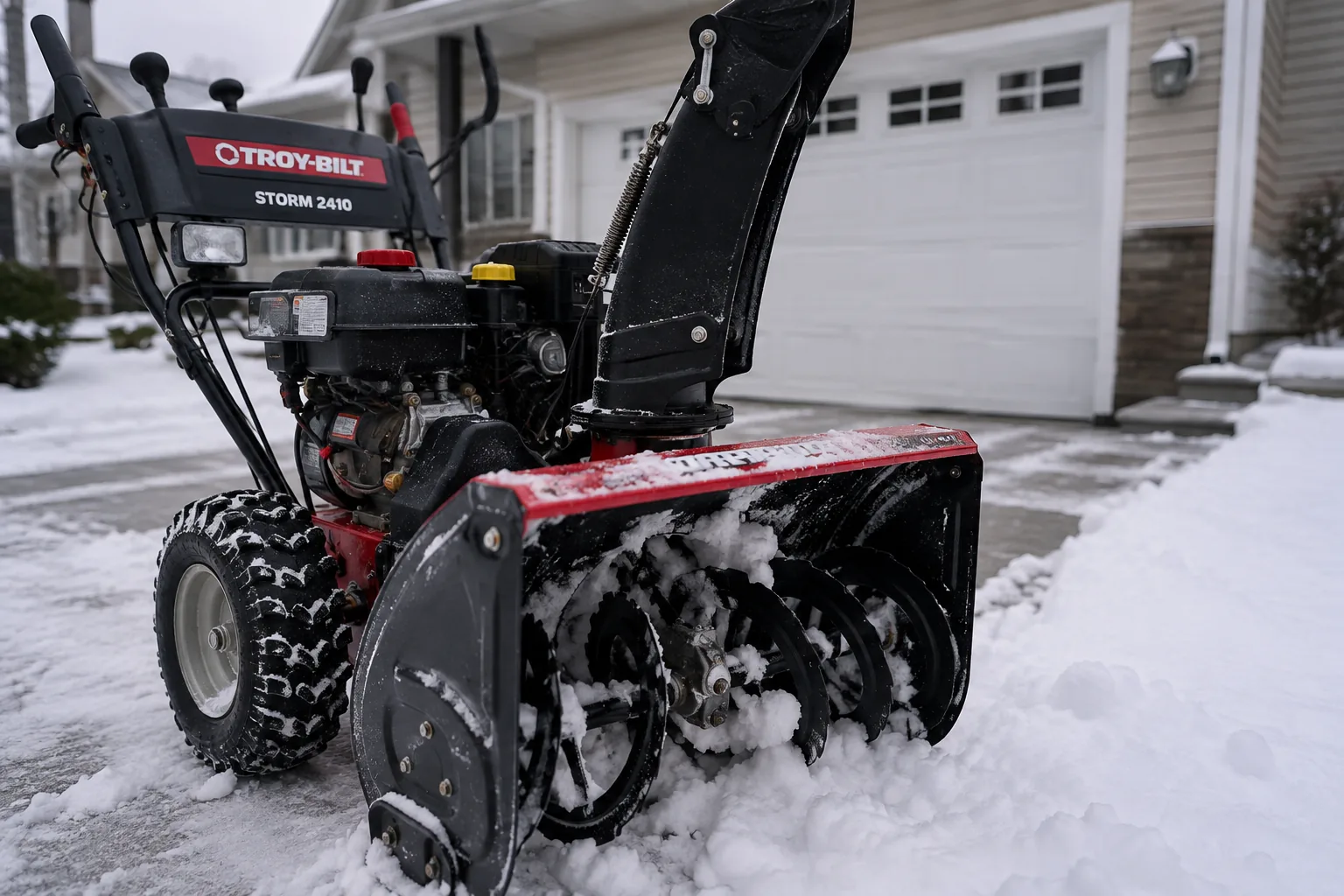
Applies to Storm 2410 family
Identifiers: Storm 2410 · 31BS6KN2766 · 31BS6BN2766 · 31AS6BN2723 · 31AS62N2766 · 31AS62N2711
Guide scope: The Storm 2410 name spans several 11-character Troy-Bilt product IDs. The stop-now troubleshooting branch is shared family logic; any replacement auger, shear hardware or rotating part must still be matched to the exact Product Identification Label and its manual revision.
Always match the 11-character product ID before ordering parts.
The troubleshooting table treats excessive vibration as a stop-now condition tied to loose parts or a damaged auger.
Stop the engine immediately and disconnect the spark-plug wire. Do not continue running the machine to “see if it clears.”
Diagnostic sequence
Work in order. The early checks are intentionally low-disassembly and model-specific; stop once the symptom changes or the fault is confirmed.
Immediate shutdown
Why this check: Continued operation can turn a loose or damaged rotating part into a thrown-object hazard.
What to do: Stop and wait for all movement before inspection.
Visible hardware
Why this check: Loose bolts/nuts are a listed cause.
What to do: Check accessible fasteners and auger housing hardware for obvious looseness.
Auger damage and shear pins
Why this check: Bent auger flighting or impact damage can create imbalance.
What to do: Inspect both sides for deformation, missing pins and lodged objects.
Persistent vibration
Why this check: The manual directs continued vibration to an authorized service center.
What to do: Do not run it again if tightening visible hardware does not resolve the fault.
How to read this symptom on this model
Excessive vibration is different from a performance complaint because the safe response is to stop first and diagnose second. Storm 2410 troubleshooting material identifies loose parts or a damaged auger as the core manufacturer-listed causes. A vibration that begins immediately after striking a curb, rock, frozen newspaper or other buried object therefore carries more diagnostic weight than a vague complaint that the machine simply feels rough.
The timing of the vibration matters. A machine that was smooth until one impact deserves an impact inspection before any carburetor, belt or engine theory. A machine that gradually became rough over several sessions may still have loose hardware, wear or accumulated damage, but the useful evidence is whether the vibration tracks auger engagement, wheel drive, engine speed or all three. Do not keep running it just to gather that evidence; the first separation should be made with the engine disabled and by reviewing what happened immediately before the symptom appeared.
With the engine off, key removed and spark-plug wire disconnected, inspect the accessible fasteners and the auger housing without placing hands where stored movement could occur. Compare the left and right auger sections, shear-pin locations and visible shaft/housing geometry. Look for a section that sits at an unusual angle, fresh impact marks, missing hardware or a component that appears to have shifted. The goal is not to prove a hidden gearbox fault from appearance; it is to decide whether the machine is obviously unsafe to restart.
Do not confuse engine roughness with structural vibration. If the handlebars shake only when the auger is engaged, that pattern is more useful than simply saying the machine vibrates. If the entire machine shakes with the auger disengaged, the symptom may not belong to the auger-only branch and should be escalated without inventing a diagnosis that the Storm 2410 troubleshooting table does not make.
The official remedy also sets a clear DIY boundary: after stopping immediately and disconnecting the spark-plug wire, tighten loose bolts and nuts; if the vibration continues, Troy-Bilt directs the machine to an authorized Service Center. That is a stronger instruction than a generic internet checklist of bearings, belts and shafts. Once obvious external looseness is corrected, persistent vibration should not be chased by replacing rotating components one at a time without model-specific service evidence.
Use engagement state as a non-invasive classifier after the machine has been inspected and is safe enough for a brief test. Vibration present with the auger released may belong to the engine or another rotating system; vibration that appears only when the auger is engaged points more strongly toward the snow-handling rotating assembly. This observation does not authorize extended running. It simply gives the service handoff a cleaner symptom description while respecting the manual's stop-now treatment of abnormal vibration.
The first powered retest should be brief and should happen only after loose fasteners and visible rotating damage are ruled out. If vibration began immediately after striking ice, gravel or another object, keep that impact history with the inspection. A machine that still vibrates strongly after accessible hardware is secure may have a bent or damaged rotating component that cannot be judged safely by continued snow throwing. Shut it down and move to service rather than using more runtime as a test.
A new vibration after striking a buried object should end normal snow clearing until the rotating path is inspected. With the engine stopped and disabled, look for an obviously damaged auger section, a missing/sheared fastener, packed ice and loose accessible hardware; do not keep running the machine to see whether it “settles down.” If vibration is present only when the auger is engaged, preserve that fact because it keeps the attachment ahead of the engine in the diagnosis. If the whole machine shakes even with the attachment disengaged, the engine/mounting side deserves separate attention. Exact Storm 2410 product ID still matters before any replacement rotating part is ordered.
Before you order parts
Do not replace a belt solely because the machine shakes. The official troubleshooting remedy starts with immediate shutdown, spark-plug-wire disconnection and tightening loose bolts and nuts; if vibration continues, Troy-Bilt directs service-center attention. Inspect accessible fasteners, shear-pin locations, auger sections and visible housing damage for the exact 11-character model before ordering any rotating part.
If one auger section is visibly bent, if a shear pin failed during the same impact, or if the housing shows fresh contact marks, do not straighten or spin the assembly at operating speed as a test. Likewise, do not substitute stronger shear hardware to keep the machine running. A persistent vibration after obvious loose hardware is corrected is a reason to stop the DIY branch rather than buying a sequence of belts, bearings and engine parts by guess.
Before ordering any rotating part, match the 11-character model and inspect whether the vibration followed an impact. A damaged auger is one of the manufacturer's two named causes, but 'damaged' does not identify which shaft, bearing, gearbox or housing component is responsible. If visible geometry is abnormal or the vibration persists after loose external fasteners are corrected, stop at that evidence rather than guessing a part number from family name alone.
Back to the exact model hub →Retest without creating a second problem
If the only verified cause was loose external hardware and there is no sign of auger or housing damage, restore every guard and connection before a test. Start from the normal operator position, keep the area clear and make a brief unloaded check. Engage the auger only long enough to determine whether the abnormal vibration is gone; do not use a long snow-clearing pass as the first test.
If vibration returns, stop immediately and disconnect the spark-plug wire again. A repeatable vibration after an object strike, or vibration that remains after loose fasteners are corrected, should keep the machine out of service until the rotating assembly is inspected. That endpoint is more useful and safer than trying to name a gearbox, bearing or shaft failure without model-specific service evidence.
Do not call the repair successful merely because the vibration seems smaller at idle. If the manual-listed loose fastener was corrected and no impact damage is visible, the brief confirmation should include the exact operating state that originally triggered the symptom. Any return of abnormal vibration means immediate shutdown again and service escalation, not a longer pass to quantify how severe it is.
Make sure this is the right symptom
If your machine is showing an adjacent symptom instead, switch paths before changing parts: auger not turning · won't propel.
The same search phrase can lead to a different branch on another machine. Compare the nearest model-specific examples: Craftsman SB410 24-inch (CMXGBAM1054541 / 31AS6BEE793): excessive vibration after impact or during auger use · Husqvarna ST 224 family (970528602 / 961930096): excessive vibration or handle movement.
Model-specific notes
- A vibration that begins immediately after striking an object deserves a more cautious inspection than a longstanding mild buzz.
- Never inspect a rotating auger by running the machine with guards removed.
Questions people get wrong on this model
Can I keep using it at a lower throttle?
No. The manual calls for immediate shutdown when vibration is excessive. The manual directs continued vibration to an authorized service center. Before ordering any rotating part, match the 11-character model and inspect whether the vibration followed an impact. If visible geometry is abnormal or the vibration persists after loose external fasteners are corrected, stop at that evidence rather than guessing a part number from family name alone.
What if all visible bolts are tight?
Stop there and have the machine serviced; hidden auger/shaft damage may remain. Inspect accessible fasteners, shear-pin locations, auger sections and visible housing damage for the exact 11-character model before ordering any rotating part. Bent auger flighting or impact damage can create imbalance. A damaged auger is one of the manufacturer's two named causes, but 'damaged' does not identify which shaft, bearing, gearbox or housing component is responsible.
Why is a foreign-object strike important even if the machine still throws snow?
Because impact damage can leave an auger, impeller or fastener unbalanced while the attachment still turns. Stop the machine, inspect for obvious damage and loose hardware, and do not use continued snow-throwing ability as proof that the vibration is safe. A persistent vibration after obvious loose hardware is corrected is a reason to stop the DIY branch rather than buying a sequence of belts, bearings and engine parts by guess.
Primary-source trail
Manufacturer material used for this diagnosis. Verify the model/serial range before ordering parts or applying an adjustment.
Troy-Bilt Storm 2410 model support pageManufacturer model page with operator manuals, diagrams and model-number guidance.www.troybilt.com →Troy-Bilt Storm 2410 alternate model supportConfirms Storm 2410 family spans multiple 11-character model numbers.www.troybilt.com →Troy-Bilt Storm 2410 model 31BS6BN2766 supportManufacturer page confirms another Storm 2410 11-character model and exposes matched manuals.www.troybilt.com →