Toro 721 QZE 38756 Not Throwing Snow Far: Rotor Wear, Cable, Belt or Snow Load?
A serial-aware 721 QZE weak-throw path that uses Toro’s single-stage rotor-blade wear indicator and control-cable/belt guidance instead of generic two-stage shear-bolt advice.
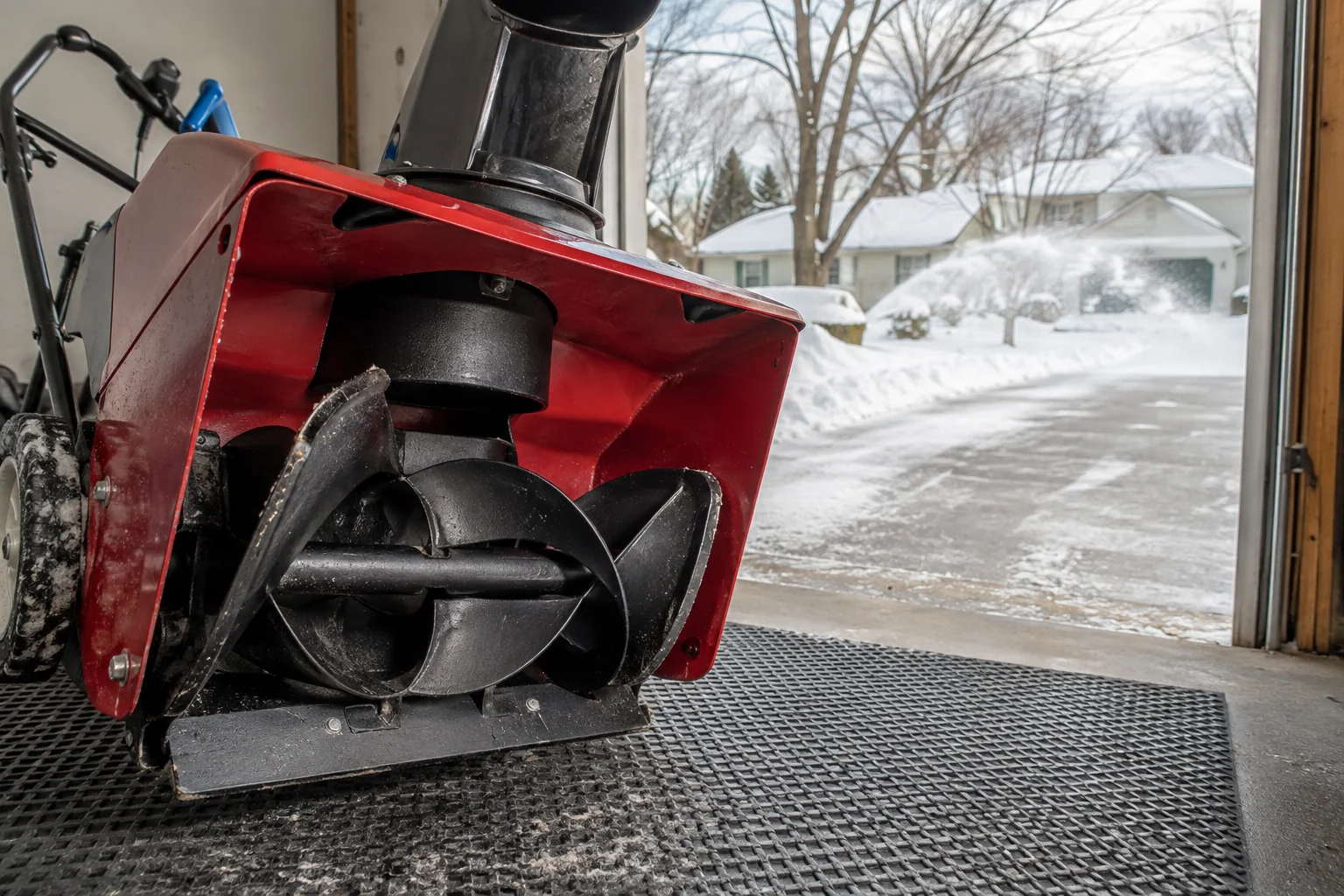
Applies to Power Clear 721 QZE (38756)
Identifiers: 38756 · 721 QZE
Engine ID: Toro 212cc
Guide scope: Exact adjustment details here are scoped to model 38756 serial 406728558+ under Toro manual 3439-829. Earlier 400000000–406728557 machines use manual 3429-269; resolve the serial before applying adjustment dimensions.
Model 38756 spans six verified serial ranges. Resolve the serial number before using manual or parts assumptions.
This model has serial-range boundaries — resolve the serial before using a manual →
721 QZE 38756 has its own chute-control context
This diagnosis is scoped to model 38756, the QZE variant with Quick Shoot. If the label says 38753, use the 721 E path rather than assuming the two pages are interchangeable.
On a later 38756, weak throw can come from too much snow load, worn rotor blades, incorrect control-cable/belt tension or a wet/slipping drive. Toro gives a visible wear-indicator hole and a 2–3 mm control-bar gap, so check those model-specific facts before buying generic auger parts.
Shut the engine off, remove the key and wait for the rotor to stop before inspection. Use a clean-out tool for packed snow; never put hands into the chute or rotor housing.
Diagnostic sequence
Work in order. The early checks are intentionally low-disassembly and model-specific; stop once the symptom changes or the fault is confirmed.
Resolve model 38756 and serial
Why this check: Toro changes manuals inside the 38756 model number, and adjustment dimensions belong to the matched manual range.
What to do: Use the model hub serial resolver. Continue with the 3439-829 dimensions only for serial 406728558 and up.
Separate heavy-snow load from repeatable weak throw
Why this check: Toro tells operators to let the machine work at its own pace in heavy snow; wet conditions can also make the belt slip temporarily.
What to do: Retest in a narrower swath or lighter snow. If throw returns when load is reduced, do not treat that alone as proof of a worn part.
Inspect the rotor-blade wear indicators
Why this check: Toro says to replace the rotor blades and scraper when a rotor-blade edge wears down to the wear-indicator hole.
What to do: With the machine safely stopped, inspect both rotor blades. If the wear-indicator hole is exposed, use Toro’s replacement/service path rather than guessing from paddle shape alone.
Check the control-cable gap and slack
Why this check: Toro specifies a 2–3 mm gap and requires some slack when the control bar is disengaged so the rotor can stop correctly.
What to do: Measure against manual 3439-829. Do not over-tighten the cable just to chase more throw distance; safe disengagement still has to work.
Listen for continuous belt squeal under load
Why this check: Toro notes that an extended-use drive belt can lose tension and slip; wet conditions can also cause temporary squeal.
What to do: If the belt continuously squeals under heavy load after the system is dry, follow the matched Toro cable/belt procedure. If the rotor fails to stop after adjustment, stop using the machine.
How to read this symptom on this model
Weak throw on the 721 QZE is easy to misdiagnose if a generic two-stage troubleshooting page is used. Model 38756 is a single-stage Power Clear machine, and Toro gives two model-appropriate checks that are especially valuable: rotor blades have a wear-indicator hole, and the control cable has a specified disengaged gap. Those observations are stronger than jumping to a shear-bolt or impeller diagnosis that belongs to a different machine architecture.
Load conditions still matter. Heavy or wet snow can shorten throw distance and can make the belt squeal temporarily. The useful comparison is whether the same machine also throws poorly in a narrower cut or lighter snow. If it does, inspect the rotor wear indicator and control/belt system; if performance returns when load is reduced, do not replace parts solely to match an idealized throw-distance claim.
Use the belt sound and rotor wear indicator together rather than treating throw distance as a single measurement. Toro says a wet belt may squeal temporarily and can be dried by running the rotor without load for 30 seconds; after extended use, persistent heavy-load squeal can instead indicate lost belt tension. Separately, rotor blades that have worn to the wear-indicator hole are due for dealer replacement together with the scraper. Those two checks separate temporary wet-drive behavior from actual wear without guessing from snow distance alone.
Keep the QZE chute-control symptom separate from the rotor-drive symptom. Model 38756 adds Quick Shoot hardware for directing discharge, so a chute that cannot reach or hold the intended direction can make useful throw appear poor even while rotor speed is normal. Verify that the discharge path is open and the chute/deflector can be positioned normally before interpreting distance alone as belt or rotor wear. If the control itself is stiff, frozen or has unequal travel, move to the dedicated Quick Shoot guide rather than compensating with more rotor-cable tension.
On Power Clear 721 QZE (38756), the order between “Resolve model 38756 and serial” and “Separate heavy-snow load from repeatable weak throw” matters because each answers a different question. Toro changes manuals inside the 38756 model number, and adjustment dimensions belong to the matched manual range. Meanwhile, toro tells operators to let the machine work at its own pace in heavy snow; wet conditions can also make the belt slip temporarily. Preserve which check passed and which did not before moving deeper. That record is especially useful when the owner describes everything simply as “not throwing snow far,” because the phrase alone does not identify the failed branch.
Judge rotor wear and snow load separately. If the 38756 throws normally in a light, narrow pass but loses distance only in deep wet snow, feed rate remains a strong explanation. If throw stays weak under modest load with a clear chute, inspect the rotor-blade wear indicators and cable/belt condition. A visible wear limit is better parts evidence than subjective throw distance, and cable tension should never be increased so far that safe rotor stopping is compromised.
Use a clear chute and ordinary snow to establish whether this is truly a distance problem. If the machine produces no discharge at all, leave this page for the rotor/drive or obstruction path. If it throws continuously but the stream is short, compare snow condition, walking pace and rotor response before ordering a belt or rotor part. A heavy, wet pass can shorten distance even with a healthy system; a repeatable short stream in lighter snow with the rotor unable to hold speed is stronger drive evidence. Keep the 38756 serial/manual split visible because the QZE chute control is not the same as the 38753 and should not be used to justify cross-model adjustment details.
Before you order parts
Resolve the 38756 serial before using any adjustment dimension. On serial 406728558+ under manual 3439-829, inspect the rotor-blade wear indicators and verify the 2–3 mm control-bar gap while preserving the slack needed for safe rotor disengagement. Do not tighten the cable beyond the manual condition just to increase throw, and do not buy paddles or a belt until visible wear, adjustment or persistent slip gives you evidence.
Before ordering Quick Shoot or chute hardware for a distance complaint, verify that the chute actually rotates through its expected left/right range and the deflector holds a useful angle. Toro gives Quick Shoot its own adjustment trigger—more than 13 mm (1/2 inch) cable slack or unequal left/right travel—so a directional-control fault should be corrected on that path instead of being mislabeled as weak rotor output.
Back to the exact model hub →Retest without creating a second problem
With covers and controls restored, first confirm that releasing the control bar stops the rotor correctly. Then make a short narrow pass in ordinary snow and compare throw behavior. If a belt adjustment improves load performance but the rotor no longer stops reliably, the repair is not acceptable; restore safe disengagement and move to Toro service.
Retest only after the chute is clear and aimed safely, using a modest swath and allowing the machine to work at its own pace. Compare performance after the drive system is dry. If throw remains weak and a rotor wear-indicator hole is exposed, stop chasing cable tension; the manual has already moved the diagnosis into the rotor-blade/scraper service branch.
Make sure this is the right symptom
The same search phrase can lead to a different branch on another machine. Compare the nearest model-specific examples: Ariens Deluxe 24 (921069): not throwing snow · Toro Power Clear 721 E (38753): not throwing snow.
Model-specific notes
- This is a single-stage Power Clear rotor system; generic two-stage shear-bolt troubleshooting is not the right first branch for model 38756.
- Toro calls for yearly rotor-blade inspection and provides a visible wear-indicator hole, which is stronger evidence than guessing from throw distance alone.
Questions people get wrong on this model
Does weak throw on a 721 QZE mean the auger belt is bad?
Not automatically. Toro also points to snow load, rotor-blade wear and control-cable/belt tension. Inspect the wear indicator and cable condition before replacing parts. If throw remains weak and a rotor wear-indicator hole is exposed, stop chasing cable tension; the manual has already moved the diagnosis into the rotor-blade/scraper service branch.
Should I tighten the control cable until it throws farther?
No. Toro requires a specific gap and some disengaged slack so the rotor stops safely. More tension is not automatically better. Toro gives Quick Shoot its own adjustment trigger—more than 13 mm (1/2 inch) cable slack or unequal left/right travel—so a directional-control fault should be corrected on that path instead of being mislabeled as weak rotor output.
Can rotor-blade wear reduce throw even when the chute is clear?
Yes. The 721 QZE manual includes rotor-blade wear inspection as part of maintaining snow-moving performance. Keep wear evidence separate from cable, belt and snow-load branches instead of assuming a clear chute rules out the rotor itself. Do not tighten the cable beyond the manual condition just to increase throw, and do not buy paddles or a belt until visible wear, adjustment or persistent slip gives you evidence.
Primary-source trail
Manufacturer material used for this diagnosis. Verify the model/serial range before ordering parts or applying an adjustment.
Toro Power Clear 721 Operator Manual 3439-829 Rev BOfficial operator manual applies to model 38756 serial 406728558 and up; includes electric-start limits and freeze-up prevention.www.toro.com →Toro 38756 Parts & Manuals — verified later serial rangeOfficial 721 QZE model page confirms 38756, electric/recoil starter and manual 3439-829 for serial 409200000–411799999; use the site serial resolver for the exact production range.www.toro.com →Toro 38756 product / serial resolverOfficial Toro model page for 38756; use its serial selector before applying a manual or parts assumption.www.toro.com →Toro 38756 Parts & Manuals — serial 411800000–413986044Official U.S. parts/manual page identifies Power Clear 721 QZE model 38756 and exposes operator manual 3439-829 plus the serial-range selector.www.toro.com →